Category: Future Innovations

  • The Ethical Implications of Artificial Intelligence We Can’t Ignore
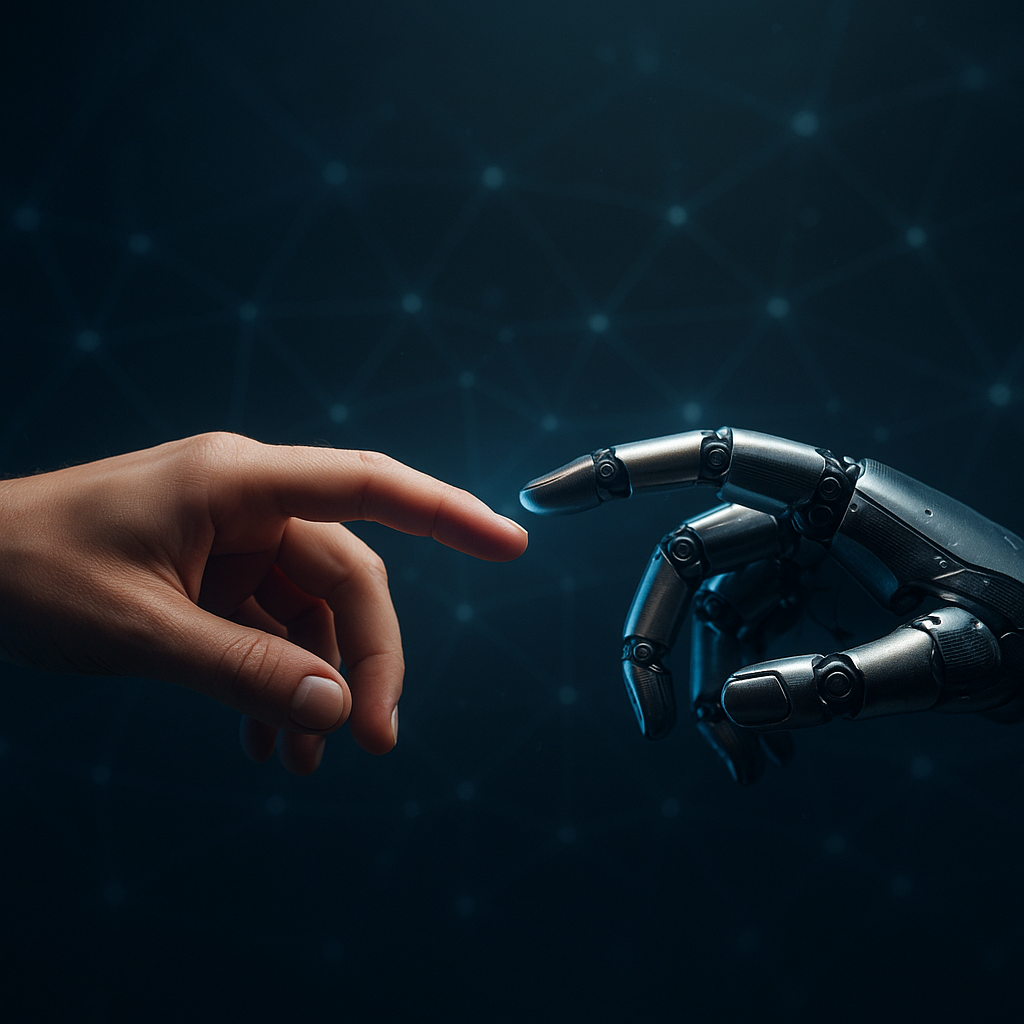
    The Ethical Implications of Artificial Intelligence We Can’t Ignore

    Artificial intelligence is no longer a concept confined to science fiction films or academic research papers. It’s embedded in hiring algorithms, medical diagnostics, criminal justice systems, social media feeds, and even the content moderation decisions that shape public discourse. As AI becomes more deeply woven into the fabric of everyday life, the ethical questions it raises are becoming impossible to sidestep — and increasingly urgent to confront.

    This isn’t just a conversation for tech companies and policymakers. It affects every person who uses a smartphone, applies for a loan, or receives a medical diagnosis. Understanding the ethical implications of artificial intelligence means grappling with questions about fairness, accountability, transparency, and what it means to be human in a world where machines are making consequential decisions.

    What Are the Core Ethical Principles of AI?

    Before diving into specific concerns, it’s worth establishing the foundational framework that ethicists, governments, and AI researchers use when evaluating AI systems. Most major frameworks converge on what are widely recognised as the four core principles of AI ethics:

    • Fairness: AI systems should treat individuals and groups equitably, without discrimination based on race, gender, age, or other protected characteristics.
    • Transparency: The way AI systems make decisions should be understandable and explainable, not opaque or hidden behind proprietary “black boxes.”
    • Accountability: There must be clear lines of responsibility when AI systems cause harm — someone, or some organisation, must be answerable.
    • Privacy: AI systems that collect and process personal data must do so with respect for individuals’ rights and with appropriate safeguards in place.

    Some frameworks, such as those published by the European Union, add additional principles including human dignity, safety, and societal wellbeing. The challenge, of course, is that acknowledging these principles is considerably easier than actually implementing them. The gap between stated values and real-world AI behaviour is where most of the ethical tension lives.

    The Three Biggest Ethical Concerns Surrounding AI

    Whilst there are many ethical dimensions to AI worth exploring, three issues tend to dominate the conversation — and for good reason. These are the areas where real-world harm is most documented, most severe, and most systemic.

    1. Bias and Discrimination

    AI systems learn from historical data. The problem is that historical data frequently reflects historical injustices. When an algorithm trained on decades of biased hiring decisions is used to screen job applicants, it doesn’t neutralise that bias — it codifies it at scale. Amazon famously scrapped an AI recruiting tool in 2018 after discovering it systematically downgraded CVs from women, having been trained predominantly on applications submitted by men.

    The consequences extend well beyond the corporate world. Facial recognition technology has been shown to misidentify Black individuals at significantly higher rates than white individuals — in some studies, error rates are up to 34 percentage points higher. When this technology is used in law enforcement, the stakes couldn’t be higher. In the United States, there have been documented cases of wrongful arrests based on faulty facial recognition matches.

    Bias in AI isn’t always intentional. It can emerge from incomplete training data, flawed assumptions baked into model design, or feedback loops that reinforce existing patterns. But whether it’s intentional or not, the harm it causes is very real.

    2. Privacy and Surveillance

    AI has dramatically expanded the capabilities of surveillance systems, both governmental and corporate. Modern AI can analyse CCTV footage in real time, track individuals across multiple cameras, predict behaviour based on browsing history, and construct detailed psychological profiles from social media activity.

    China’s social credit system is often cited as a cautionary example of AI-enabled mass surveillance, but subtler versions of the same dynamic exist in democratic countries too. Tech platforms use AI to monitor user behaviour and build advertising profiles of extraordinary detail. Smart home devices listen for wake words — but questions persist about what else they might be capturing.

    The Ethical Implications of Artificial Intelligence We Can't Ignore

    The ethical tension here is genuine. AI-powered surveillance can help prevent crime, locate missing people, and streamline public services. But without robust legal frameworks and genuine oversight, the same tools can erode civil liberties, chill free expression, and enable authoritarian control.

    3. Accountability and the “Black Box” Problem

    When a human doctor makes a mistake, there are systems in place to investigate what happened and assign responsibility. When an AI system makes a mistake — misdiagnosing a patient, incorrectly denying a benefits claim, or flagging an innocent person as a fraud risk — accountability becomes murky. Who is responsible? The developer? The company that deployed the system? The regulator that approved it?

    This is compounded by the “black box” problem. Many advanced AI systems, particularly those built on deep learning, cannot explain their own decisions in human-understandable terms. They produce outputs without providing reasoning. This lack of transparency makes it extremely difficult to identify when something has gone wrong, let alone why — or to hold anyone accountable.

    AI Ethics in Specific Domains

    In Medicine and Healthcare

    Healthcare is one of the most exciting — and ethically fraught — frontiers for AI. Algorithms are being developed that can detect certain cancers from imaging scans with accuracy that rivals experienced radiologists. AI is being used to predict patient deterioration in ICUs, flag drug interaction risks, and help diagnose rare diseases that might otherwise go undetected for years.

    But the ethical implications are significant. Who is liable when an AI-assisted diagnosis is wrong? How do patients consent to having their medical data used to train AI models? Does the widespread adoption of AI in healthcare risk widening health disparities if the technology is more accurate for some demographic groups than others? These aren’t hypothetical questions — they’re live issues being debated in hospitals, medical schools, and courtrooms right now.

    In the Workplace

    AI is reshaping employment in two distinct ways: by changing the nature of existing jobs, and by automating some roles out of existence entirely. A 2023 Goldman Sachs report estimated that AI could automate tasks that account for approximately 300 million full-time jobs globally. That’s not to say all those jobs will disappear — but they will change, often substantially.

    Beyond job displacement, AI is being used to monitor workers in ways that raise serious concerns. Warehouse employees have their productivity tracked second-by-second. Delivery drivers are monitored by in-cab cameras that use AI to detect distraction or drowsiness. Remote workers are subject to “bossware” that tracks keystrokes, takes screenshots, and monitors time spent on various applications. Understanding how automation is redefining careers helps put these workplace changes in broader context.

    There’s a reasonable argument that some monitoring is legitimate — particularly for safety-critical roles. But the volume and intrusiveness of AI-enabled workplace surveillance is a qualitatively different proposition from a manager walking the floor, and it deserves proportionate scrutiny.

    In Education

    The rise of generative AI tools like ChatGPT has thrown the education sector into something of a crisis, prompting urgent debates about academic integrity, the purpose of assessment, and how schools and universities should respond. But there are deeper ethical questions too.

    AI-driven personalised learning platforms collect vast amounts of data about students’ learning patterns, attention spans, and emotional states. This data could theoretically be used to optimise learning outcomes — but it could also be used to label and categorise children in ways that become self-fulfilling prophecies. A student flagged early as a “low performer” by an algorithm might receive less enriching content, reinforcing rather than correcting an initial disadvantage.

    The Ethical Implications of Artificial Intelligence We Can't Ignore

    The 30% Rule — What It Means in Practice

    You may have encountered references to a “30% rule” in discussions about AI. This concept, which has circulated in various forms in AI governance conversations, generally refers to a suggested threshold: when AI systems are making or significantly influencing decisions that affect more than 30% of an organisation’s outcomes, independent human oversight and review mechanisms should be mandatory.

    Whilst this is not a formally enacted legal standard in most jurisdictions, it reflects a broader principle that has genuine ethical weight — namely, that as AI’s influence over consequential decisions grows, the structures for human oversight must scale proportionately. The moment AI moves from being a helpful tool to the primary decision-maker, the accountability requirements must change accordingly.

    Who Is Responsible for Getting This Right?

    Responsibility for AI ethics doesn’t sit with any single actor. It’s distributed across a broad ecosystem of stakeholders, each with a distinct role to play.

    • AI developers and researchers bear responsibility for building systems that are technically robust, auditable, and designed with ethics in mind from the outset — not retrofitted after the fact.
    • Corporations deploying AI must ensure they understand the systems they’re using, conduct meaningful impact assessments, and are prepared to pull systems that cause disproportionate harm.
    • Governments and regulators need to create legal frameworks that are specific enough to be enforceable, flexible enough to keep pace with technological change, and robust enough to have genuine teeth.
    • Civil society — journalists, advocacy groups, academics — plays a crucial watchdog role, scrutinising AI deployments and giving voice to those harmed.
    • Individuals can advocate for their rights, support organisations working on AI accountability, and make informed decisions about the services and products they use.

    The EU’s AI Act, which came into force in 2024, represents one of the most ambitious attempts to regulate AI through legislation. It establishes a risk-based framework, with the highest levels of scrutiny reserved for “high-risk” applications in areas like healthcare, education, and law enforcement. Whether it will prove effective remains to be seen — but it signals that the era of self-regulation alone is ending. Notably, AI’s role in shaping social media algorithms and their effects on wellbeing is one area where regulators are paying particularly close attention.

    Conclusion: Why These Conversations Can’t Wait

    The ethical implications of artificial intelligence are not abstract philosophical puzzles. They are practical, urgent, and affecting real people right now — people who were denied jobs, wrongly identified by facial recognition, had their medical decisions influenced by opaque algorithms, or lost their livelihoods to automation.

    The four principles of AI ethics — fairness, transparency, accountability, and privacy — provide a useful compass, but principles alone are insufficient without enforcement mechanisms, meaningful regulation, and a genuine commitment from those building and deploying these systems to prioritise human wellbeing over efficiency and profit.

    AI offers extraordinary potential: to accelerate medical research, expand access to education, reduce human error in dangerous environments, and solve complex global problems. None of that potential is negated by taking its ethical implications seriously. In fact, confronting these questions honestly is the only way to ensure that AI’s benefits are broadly shared rather than concentrated in the hands of a few — and that its harms don’t fall disproportionately on those who are already most vulnerable.

    The technology is developing faster than our ethical and regulatory frameworks. Closing that gap is one of the defining challenges of this decade — and it belongs to all of us.

  • How Technology Has Changed Over Time

    How Technology Has Changed Over Time

    Technology has become an integral part of our daily lives. From the moment we wake up in the morning to the moment we go to bed at night, we are surrounded by technology in one form or another. The smartphone in our pocket, the laptop on our desk, and the appliances in our homes are all examples of technology. Speaking from a personal point of view, I know that I wouldn’t be able to survive without technology. Although I am a bit of a tech nerd! For my first blog post, I wanted to talk about how technology has changed over time and how it could change in the future.

    The Evolution of Technology

    Technology has come a long way since its early days. The first known technology was the wheel, which was invented around 3500 BC. From there, humans developed tools and weapons made from stone, bronze, and iron. The invention of the printing press in the 15th century revolutionized communication by making it possible to produce books and other printed materials on a large scale. In the 19th century, the Industrial Revolution saw the emergence of steam-powered machines and the production of textiles, iron, and steel on a mass scale. But there is one invention that accelerated this growth more than anything: electricity.

    Indeed, the invention of electricity was a pivotal moment in human history. While there were many individuals who made contributions to the development of electricity, Benjamin Franklin is often credited with discovering electricity through his famous kite experiment in 1752. However, it wasn’t until the 19th century that electricity truly began to change the world, with inventions such as the light bulb, telegraph, and telephone. Eventually, the invention of electricity made it possible to power homes and businesses, and the telephone and radio allowed people to communicate across great distances.

    The 20th century saw even more rapid advancements in technology, largely thanks to electricity. The first computer was built in the 1940s, and by the 1960s, computers were being used in businesses and research institutions. The internet, invented in the 1980s, has transformed communication and made it possible for people to access information from anywhere in the world. Today, electricity is a crucial component of our daily lives, powering everything from our homes to our vehicles. As our reliance on electrical infrastructure grows, the demand for more flexible and efficient grid connections has become paramount for modern developments. Organizations like the Eclipse Power Group are at the forefront of this evolution, providing essential IDNO services that facilitate complex energy projects.

    This modern approach to power distribution ensures that large-scale developments can secure the capacity they need while maintaining cost-effectiveness and technical reliability. Modern vehicles and industrial machines have come a long way from those early steam designs. Most of these systems now use internal combustion engines that need specific parts to operate safely. Items such as Cummins Solenoids are used to manage the flow of fuel and help engines start up without issues. These parts are common in the heavy equipment that builds our roads and keeps our supply chains moving. Having reliable components is a big part of why our current infrastructure works so well. It shows how mechanical engineering and electrical power now work together in almost every industry.

    Today’s Technology

    Technology has continued to evolve rapidly in recent years. We are now living in an age where smartphones have become an indispensable part of our lives. Smartphones allow us to communicate with others, access the internet, and run various applications that help us in our daily lives. Social media platforms such as Facebook and Twitter have made it possible for people to connect with others on a global scale.

    In addition to smartphones, smart home technology has become an integral part of modern living. With just a few taps on a mobile device, it’s possible to control a wide range of home appliances, including lights, thermostats, door locks, and security systems. This not only adds convenience but also supports more efficient energy management. For example, lights can be turned off remotely or the thermostat adjusted before arriving home. Smart systems can also send real-time alerts, keeping homeowners informed and secure even when away. As these technologies become more advanced, ensuring they are installed and maintained correctly is essential. Professional support from Fort Myers FL electrical services (or similar providers in your area) can help homeowners integrate these systems safely and effectively, ensuring optimal performance and long-term reliability. With the right setup, smart home technology enhances everyday living through increased efficiency, security, and control.

    Artificial Intelligence is another remarkable technology that continues to transform everyday life. AI-powered virtual assistants such as Amazon’s Alexa and Google Assistant have become widely popular, allowing various tasks to be managed through simple voice commands. Beyond smart homes, many businesses are now tapping into the potential of AI to improve their operations and connect with customers in more innovative ways. In the fashion industry, for instance, platforms like https://www.hautech.ai/ are being used to generate striking fashion photos through AI-generated models, eliminating the need for traditional photo-shoots. Likewise, the real estate sector is adopting AI for virtual staging, market trend prediction, and offering property suggestions to potential buyers.

    The Future of Technology

    Looking ahead, it is clear that technology will continue to shape our lives in ways we cannot yet imagine. One area that is likely to see significant development is AI. As AI technology advances, we can expect to see more sophisticated virtual assistants that can perform more complex tasks. We are also likely to see more AI-powered products, such as self-driving cars and delivery drones.

    Another area that is likely to see significant development is the Internet of Things (IoT). IoT refers to the interconnected network of devices, vehicles, and other items that are embedded with sensors, software, and other technologies. This technology has the potential to transform the way we live and work by making it possible for us to control and monitor various aspects of our lives through our smartphones or other devices.

    In conclusion, technology has come a long way since the invention of the wheel. The evolution of technology has seen the emergence of various technologies that have transformed our lives. Today, we are surrounded by technology that allows us to communicate, work, and play in ways that were once unimaginable. As technology continues to evolve, it is important that we embrace it and use it to improve our lives while being mindful of its potential risks and drawbacks.

  • 5 Ways AI Will Influence Our Lives In The Future

    5 Ways AI Will Influence Our Lives In The Future

    • Safer Transportation: Self-driving cars are already being developed and tested, and in the future, they could become the norm. AI will play a crucial role in the development of these vehicles, making them safer and more efficient than traditional cars.
    • Improved Education: AI can also be used to improve education by personalizing learning experiences for individual students. This means that teachers will be able to provide customized lesson plans that are tailored to each student’s strengths and weaknesses, ensuring that they are learning at the right pace and with the right level of challenge.

    The Future of AI

    As someone who is passionate about technology and innovation, I am excited to see how AI will continue to change and improve our lives. I believe that AI has the potential to solve many of the world’s most pressing problems, from climate change to disease prevention, and I am eager to see what the future holds.

    AI is already changing the world in countless ways, and it will continue to do so in the future. From improved personalization to safer transportation, AI has the potential to revolutionize many industries and improve our lives in ways that we cannot yet imagine. As we continue to develop and refine AI technologies, it will be important to keep in mind the ethical considerations and ensure that we use this powerful tool for the greater good.

    • Better Healthcare: AI will revolutionize the healthcare industry in a number of ways, from more accurate diagnoses to personalized treatment plans. AI algorithms can analyze vast amounts of patient data to identify patterns and predict outcomes, allowing doctors to make more informed decisions about patient care.
    • Safer Transportation: Self-driving cars are already being developed and tested, and in the future, they could become the norm. AI will play a crucial role in the development of these vehicles, making them safer and more efficient than traditional cars.
    • Improved Education: AI can also be used to improve education by personalizing learning experiences for individual students. This means that teachers will be able to provide customized lesson plans that are tailored to each student’s strengths and weaknesses, ensuring that they are learning at the right pace and with the right level of challenge.

    The Future of AI

    As someone who is passionate about technology and innovation, I am excited to see how AI will continue to change and improve our lives. I believe that AI has the potential to solve many of the world’s most pressing problems, from climate change to disease prevention, and I am eager to see what the future holds.

    AI is already changing the world in countless ways, and it will continue to do so in the future. From improved personalization to safer transportation, AI has the potential to revolutionize many industries and improve our lives in ways that we cannot yet imagine. As we continue to develop and refine AI technologies, it will be important to keep in mind the ethical considerations and ensure that we use this powerful tool for the greater good.

    • Increased Automation: AI will also lead to increased automation in many industries, from manufacturing to transportation. This will allow for more efficient and cost-effective production processes, and it will free up time for workers to focus on more complex tasks that require human expertise.
    • Better Healthcare: AI will revolutionize the healthcare industry in a number of ways, from more accurate diagnoses to personalized treatment plans. AI algorithms can analyze vast amounts of patient data to identify patterns and predict outcomes, allowing doctors to make more informed decisions about patient care.
    • Safer Transportation: Self-driving cars are already being developed and tested, and in the future, they could become the norm. AI will play a crucial role in the development of these vehicles, making them safer and more efficient than traditional cars.
    • Improved Education: AI can also be used to improve education by personalizing learning experiences for individual students. This means that teachers will be able to provide customized lesson plans that are tailored to each student’s strengths and weaknesses, ensuring that they are learning at the right pace and with the right level of challenge.

    The Future of AI

    As someone who is passionate about technology and innovation, I am excited to see how AI will continue to change and improve our lives. I believe that AI has the potential to solve many of the world’s most pressing problems, from climate change to disease prevention, and I am eager to see what the future holds.

    AI is already changing the world in countless ways, and it will continue to do so in the future. From improved personalization to safer transportation, AI has the potential to revolutionize many industries and improve our lives in ways that we cannot yet imagine. As we continue to develop and refine AI technologies, it will be important to keep in mind the ethical considerations and ensure that we use this powerful tool for the greater good.

    • Improved Personalization: One of the most exciting ways that AI will influence our lives in the future is through improved personalization. AI algorithms will be able to learn our habits, preferences, and behaviors, and use this information to customize our experiences. This means that everything from our entertainment choices to our shopping experiences will be tailored to our individual tastes.
    • Increased Automation: AI will also lead to increased automation in many industries, from manufacturing to transportation. This will allow for more efficient and cost-effective production processes, and it will free up time for workers to focus on more complex tasks that require human expertise.
    • Better Healthcare: AI will revolutionize the healthcare industry in a number of ways, from more accurate diagnoses to personalized treatment plans. AI algorithms can analyze vast amounts of patient data to identify patterns and predict outcomes, allowing doctors to make more informed decisions about patient care.
    • Safer Transportation: Self-driving cars are already being developed and tested, and in the future, they could become the norm. AI will play a crucial role in the development of these vehicles, making them safer and more efficient than traditional cars.
    • Improved Education: AI can also be used to improve education by personalizing learning experiences for individual students. This means that teachers will be able to provide customized lesson plans that are tailored to each student’s strengths and weaknesses, ensuring that they are learning at the right pace and with the right level of challenge.

    The Future of AI

    As someone who is passionate about technology and innovation, I am excited to see how AI will continue to change and improve our lives. I believe that AI has the potential to solve many of the world’s most pressing problems, from climate change to disease prevention, and I am eager to see what the future holds.

    AI is already changing the world in countless ways, and it will continue to do so in the future. From improved personalization to safer transportation, AI has the potential to revolutionize many industries and improve our lives in ways that we cannot yet imagine. As we continue to develop and refine AI technologies, it will be important to keep in mind the ethical considerations and ensure that we use this powerful tool for the greater good.

    I’ll be very shocked if you haven’t already heard of AI, but for those of you who have been living under a rock, let me explain! Artificial Intelligence, or AI, is a buzzword that has been around for a while now. It refers to the development of machines and computer systems that can perform tasks that normally require human intelligence, such as visual perception, speech recognition, decision-making, and language translation.

    You may not know it, but the chances are you are already familiar with AI. For example, if you have an Alexa or a Google Assistant, then you are using and benefiting from AI. If your home is a smart home, or if you use the recommendation systems that suggest movies and TV shows on streaming services, then you are also using and benefiting from AI. Whilst these are only minor things right now, it is very likely that AI will be used even more extensively in the future. In this article, I will explore 5 ways in which AI will influence our lives in the future, from everyday tasks to complex problem-solving.

    The Invention and Evolution of AI

    AI was first coined in 1956 by computer scientist John McCarthy, and since then, it has evolved rapidly. In the early days, AI was limited to basic decision-making tasks, but with the development of more advanced algorithms, neural networks, and machine learning, AI has become much more sophisticated. Today, AI is used in a variety of fields, from healthcare to finance, and it has even started to influence the way we live our lives.

    Current Uses of AI

    At present, AI is used in a variety of ways, from chatbots that can answer customer inquiries to predictive analytics that can help businesses make better decisions. AI is also used in healthcare, where it can help doctors diagnose and treat diseases more accurately, and in education, where it can help teachers customize lessons for individual students.

    5 Ways AI Will Influence Our Lives in the Future

    • Improved Personalization: One of the most exciting ways that AI will influence our lives in the future is through improved personalization. AI algorithms will be able to learn our habits, preferences, and behaviors, and use this information to customize our experiences. This means that everything from our entertainment choices to our shopping experiences will be tailored to our individual tastes.
    • Increased Automation: AI will also lead to increased automation in many industries, from manufacturing to transportation. This will allow for more efficient and cost-effective production processes, and it will free up time for workers to focus on more complex tasks that require human expertise.
    • Better Healthcare: AI will revolutionize the healthcare industry in a number of ways, from more accurate diagnoses to personalized treatment plans. AI algorithms can analyze vast amounts of patient data to identify patterns and predict outcomes, allowing doctors to make more informed decisions about patient care.
    • Safer Transportation: Self-driving cars are already being developed and tested, and in the future, they could become the norm. AI will play a crucial role in the development of these vehicles, making them safer and more efficient than traditional cars.
    • Improved Education: AI can also be used to improve education by personalizing learning experiences for individual students. This means that teachers will be able to provide customized lesson plans that are tailored to each student’s strengths and weaknesses, ensuring that they are learning at the right pace and with the right level of challenge.

    The Future of AI

    As someone who is passionate about technology and innovation, I am excited to see how AI will continue to change and improve our lives. I believe that AI has the potential to solve many of the world’s most pressing problems, from climate change to disease prevention, and I am eager to see what the future holds.

    AI is already changing the world in countless ways, and it will continue to do so in the future. From improved personalization to safer transportation, AI has the potential to revolutionize many industries and improve our lives in ways that we cannot yet imagine. As we continue to develop and refine AI technologies, it will be important to keep in mind the ethical considerations and ensure that we use this powerful tool for the greater good.